


Finally, we fast
forward ten years from our last trip in the Intravenous Magazine time
machine (FYI, we're using Back To The Future Rules here!). The year
is 1995; MTV still has a generation grasped firmly in its neon claws
feeding it a steady diet of alternative rock and electronic music.
AOL and Prodigy coupled with Windows 95 and Yahoo! made home
computing and access to the world wide web to millions. Richey
Edwards form The Manic Street Preachers goes missing and is never
seen again. Saddam Hussein is getting under the west's skin. Russian
and US cooperation reaches new heights as NASA astronauts dock with
the space station Mir. The DVD is announced as a new video and
storage format. And the Million Man March happens in Washington D.C.
It was also another great year for music that saw heavyweights of goth, rock, indie, industrial, metal, and electronic music from the previous decade rub shoulders with a slew of hot newcomers and hungry young bands.
As with our previous outing we decided to keep it to just twenty LP/EP releases that stood out and set the standard for that year.
As with most of these kind of articles this is by no means the definitive releases of the year. Rather a cross-section of classics and other gems celebrating their 20th year. So sit back and relax as we take a trip back to 1995...
Siouxsie And The Banshees – 'The Rapture'
 1995 saw the eleventh and final studio album from the seminal
Siouxsie And The Banshees. Having formed in the crucible of punk, the
band had become internationally renowned by the 1980s and Siouxsies
iconic voice and style became a heavy influence on the gothic
movement. The album showed that even after 20 years they were still
able to pull a great album out of the bag, and one that continued to
push the experimental ideas first heard on 'Peepshow', and blend them
with the psychedelic pop of 'A Kiss In The Dreamhouse'. For some
bizarre reason the band's label Polydoor would soon drop them,
instigating the band's break-up after a world tour to support the
album. Siouxsie and Budgie carried on as the Creatures, and seven
years later the Banshees reunited for a tour and live album. But 'The
Rapture', however lived up to it's title and is a fitting swansong
for a band that is still sorely missed.
1995 saw the eleventh and final studio album from the seminal
Siouxsie And The Banshees. Having formed in the crucible of punk, the
band had become internationally renowned by the 1980s and Siouxsies
iconic voice and style became a heavy influence on the gothic
movement. The album showed that even after 20 years they were still
able to pull a great album out of the bag, and one that continued to
push the experimental ideas first heard on 'Peepshow', and blend them
with the psychedelic pop of 'A Kiss In The Dreamhouse'. For some
bizarre reason the band's label Polydoor would soon drop them,
instigating the band's break-up after a world tour to support the
album. Siouxsie and Budgie carried on as the Creatures, and seven
years later the Banshees reunited for a tour and live album. But 'The
Rapture', however lived up to it's title and is a fitting swansong
for a band that is still sorely missed.
Swans – 'The Great Annihilator'
 'The Great Annihilator' is a bit of an
oddity in the Swans back catalogue but for good reasons. After a
three year break, Michael Gira and Jarboe return with a refreshed
core of musicians and some new ideas that they have had plenty of
time to perfect. It is a wonderfully vibrant and experimental blend
of post-punk, noise rock, gothic and industrial that sees a renewed
and stripped-down approach and some of the band's catchiest songs to
that point. The end result is something much more approachable than
any Swans album before it, yet it keeps that uncompromising artistic
integrity and apt for challenging songwriting. It's little swing
towards some more commercial noises may have set off alarm bells for
a few critics at the time. But there is no denying that 'The Great
Annihilator' has held its own over the past 20 years as one of the
essential albums in the band's catalogue.
'The Great Annihilator' is a bit of an
oddity in the Swans back catalogue but for good reasons. After a
three year break, Michael Gira and Jarboe return with a refreshed
core of musicians and some new ideas that they have had plenty of
time to perfect. It is a wonderfully vibrant and experimental blend
of post-punk, noise rock, gothic and industrial that sees a renewed
and stripped-down approach and some of the band's catchiest songs to
that point. The end result is something much more approachable than
any Swans album before it, yet it keeps that uncompromising artistic
integrity and apt for challenging songwriting. It's little swing
towards some more commercial noises may have set off alarm bells for
a few critics at the time. But there is no denying that 'The Great
Annihilator' has held its own over the past 20 years as one of the
essential albums in the band's catalogue.
Dark Tranquillity – 'Of Chaos and Eternal Night'
It was also another great year for music that saw heavyweights of goth, rock, indie, industrial, metal, and electronic music from the previous decade rub shoulders with a slew of hot newcomers and hungry young bands.
As with our previous outing we decided to keep it to just twenty LP/EP releases that stood out and set the standard for that year.
As with most of these kind of articles this is by no means the definitive releases of the year. Rather a cross-section of classics and other gems celebrating their 20th year. So sit back and relax as we take a trip back to 1995...
Siouxsie And The Banshees – 'The Rapture'
1995 saw the eleventh and final studio album from the seminal
Siouxsie And The Banshees. Having formed in the crucible of punk, the
band had become internationally renowned by the 1980s and Siouxsies
iconic voice and style became a heavy influence on the gothic
movement. The album showed that even after 20 years they were still
able to pull a great album out of the bag, and one that continued to
push the experimental ideas first heard on 'Peepshow', and blend them
with the psychedelic pop of 'A Kiss In The Dreamhouse'. For some
bizarre reason the band's label Polydoor would soon drop them,
instigating the band's break-up after a world tour to support the
album. Siouxsie and Budgie carried on as the Creatures, and seven
years later the Banshees reunited for a tour and live album. But 'The
Rapture', however lived up to it's title and is a fitting swansong
for a band that is still sorely missed.Swans – 'The Great Annihilator'
'The Great Annihilator' is a bit of an
oddity in the Swans back catalogue but for good reasons. After a
three year break, Michael Gira and Jarboe return with a refreshed
core of musicians and some new ideas that they have had plenty of
time to perfect. It is a wonderfully vibrant and experimental blend
of post-punk, noise rock, gothic and industrial that sees a renewed
and stripped-down approach and some of the band's catchiest songs to
that point. The end result is something much more approachable than
any Swans album before it, yet it keeps that uncompromising artistic
integrity and apt for challenging songwriting. It's little swing
towards some more commercial noises may have set off alarm bells for
a few critics at the time. But there is no denying that 'The Great
Annihilator' has held its own over the past 20 years as one of the
essential albums in the band's catalogue. Dark Tranquillity – 'Of Chaos and Eternal Night'
 'Of Chaos And
Eternal Night' was a crossroad for Swedish death metal outfit Dark
Tranquillity. Having first dropped the super-technical, though
unfocussed 'Skyflower' in 1993, the band subsequently lost their
original vocalist and began to work towards the more disciplined
melodic death metal that would become their forte. This EP has been
maligned by a lot of people over the years, but it is still an
important release not only in the development of the band, but of the
melodic death metal genre as a whole. There is a defined sense of
evolution over the course of the tracks here which range from the
scatter-shot technical death metal sound of their first album,
becoming more focused as they incorporate death-doom and more
traditional rock songwriting elements into their sound. It may not be
a definitive release for the ages, but for those with a love of
melodic death metal, this EP perfectly distils the efforts of this
generation of bands to move from their roots and form that sound.
'Of Chaos And
Eternal Night' was a crossroad for Swedish death metal outfit Dark
Tranquillity. Having first dropped the super-technical, though
unfocussed 'Skyflower' in 1993, the band subsequently lost their
original vocalist and began to work towards the more disciplined
melodic death metal that would become their forte. This EP has been
maligned by a lot of people over the years, but it is still an
important release not only in the development of the band, but of the
melodic death metal genre as a whole. There is a defined sense of
evolution over the course of the tracks here which range from the
scatter-shot technical death metal sound of their first album,
becoming more focused as they incorporate death-doom and more
traditional rock songwriting elements into their sound. It may not be
a definitive release for the ages, but for those with a love of
melodic death metal, this EP perfectly distils the efforts of this
generation of bands to move from their roots and form that sound.
Aphex Twin – '...I Care Because You Do'
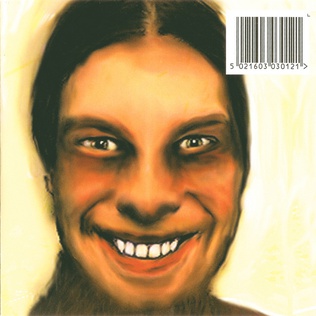 Richard
D. James returned in 1995 with 'Ventolin', one of the harshest techno
singles ever, quickly followed by his third full-length album '...I
Care Because You Do'. Blending his early hardcore techno roots with
his more ambient leanings, James manages to create an album that is
both comforting and unsettling at the same time. There are nods to
the likes of Philip Glass and John Cage, as well as early drum 'n'
bass elements making an appearance. There is an air of simplicity
about the arrangements which only serves to heighten the disparate
elements that James chooses. It isn't the mass appeal techno of The
Chemical Brothers, Moby, or The Orb. It is a deeper more intelligent
approach that owes just as much to avant-garde pioneers as it does to
the dance floor. '...I Care Because You Do' is an important album in
the development of IDM and bringing a more cerebral approach to
electronica.
Richard
D. James returned in 1995 with 'Ventolin', one of the harshest techno
singles ever, quickly followed by his third full-length album '...I
Care Because You Do'. Blending his early hardcore techno roots with
his more ambient leanings, James manages to create an album that is
both comforting and unsettling at the same time. There are nods to
the likes of Philip Glass and John Cage, as well as early drum 'n'
bass elements making an appearance. There is an air of simplicity
about the arrangements which only serves to heighten the disparate
elements that James chooses. It isn't the mass appeal techno of The
Chemical Brothers, Moby, or The Orb. It is a deeper more intelligent
approach that owes just as much to avant-garde pioneers as it does to
the dance floor. '...I Care Because You Do' is an important album in
the development of IDM and bringing a more cerebral approach to
electronica. Faith No More – 'King For A Day... Fool For A Life Time'
 Faith No More's fifth studio album was a
serious departure that divided critics upon its release in 1995. The
first of the band's album's recorded without Jim Martin, the heavy
metal leanings of their previous output began to be mixed with
elements of jazz, funk, prog rock and classical music. The result is
a provocative and eclectic exploration of genre and songwriting
conventions. It was perhaps a little ahead of it's time which is why
it is so criminally underrated today. But with songs such as
'Ricochet', 'Digging the Grave', 'Evidence' and 'Just A Man'
included, it is hard to resist its charms if you are open to them. It
is one of the most accomplished and nightmarish albums in the
brilliant Faith No More discography and one that definitely needs to
be re-evaluated by critics for the progressive work it is that laid
the groundwork for the final album of their original run and
subsequent studio comeback in 2014.
Faith No More's fifth studio album was a
serious departure that divided critics upon its release in 1995. The
first of the band's album's recorded without Jim Martin, the heavy
metal leanings of their previous output began to be mixed with
elements of jazz, funk, prog rock and classical music. The result is
a provocative and eclectic exploration of genre and songwriting
conventions. It was perhaps a little ahead of it's time which is why
it is so criminally underrated today. But with songs such as
'Ricochet', 'Digging the Grave', 'Evidence' and 'Just A Man'
included, it is hard to resist its charms if you are open to them. It
is one of the most accomplished and nightmarish albums in the
brilliant Faith No More discography and one that definitely needs to
be re-evaluated by critics for the progressive work it is that laid
the groundwork for the final album of their original run and
subsequent studio comeback in 2014. Atari Teenage Riot – 'Delete Yourself!'
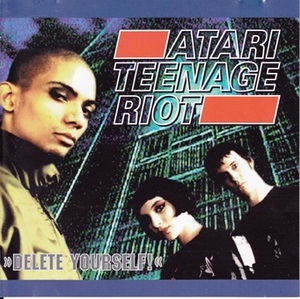 'Delete Yourself!' is part album, part
political manifesto. Berlin's Atari Teenage Riot burst onto the scene
in a big way in 1995 with their full-length début. Opening with the
rallying cry of 'Start The Riot!' the Trio of Alec Empire, Hanin
Elias, and Carl Crack unleashed an intense barrage of high BPM blends
of jungle, techno, punk rock, and rave they christened “Digital
Hardcore”. A reaction to the neo-nazi influenced Berlin techno
scene of the time, the album's anti-fascist themes,
slogan-like/sound-bite lyrics that sound as though they were recorded
through a megaphone, and fast adrenalin fuelled rhythms combine to
create an aggressive and powerful call to arms for cyberpunks. Though
subsequent albums would further stylize and perfect the band's
formula, 'Delete Yourself!' remains a pure expression of angst and
political radicalism that stands on the barricade ready to take on
all comers.
'Delete Yourself!' is part album, part
political manifesto. Berlin's Atari Teenage Riot burst onto the scene
in a big way in 1995 with their full-length début. Opening with the
rallying cry of 'Start The Riot!' the Trio of Alec Empire, Hanin
Elias, and Carl Crack unleashed an intense barrage of high BPM blends
of jungle, techno, punk rock, and rave they christened “Digital
Hardcore”. A reaction to the neo-nazi influenced Berlin techno
scene of the time, the album's anti-fascist themes,
slogan-like/sound-bite lyrics that sound as though they were recorded
through a megaphone, and fast adrenalin fuelled rhythms combine to
create an aggressive and powerful call to arms for cyberpunks. Though
subsequent albums would further stylize and perfect the band's
formula, 'Delete Yourself!' remains a pure expression of angst and
political radicalism that stands on the barricade ready to take on
all comers. KMFDM – 'Nihil'
 By the time 1995's
'Nihil' was unleashed, KMFDM were already a veteran band with seven
albums under their collective belt. Seeing the return of Raymond
Watts to the fold was a breath of fresh air for the band and the
subsequent album 'Nihil' went on to produce one of the band's best
known anthems in 'Juke Joint Jezebel', as well as 'Disobedience',
'Flesh', 'Beast' and 'Brute'. By the end of the year the album became
Wax Trax! most successful release and KMFDM their most valuable asset
along with it. Quite rightly the album saw critical praise for the
both the songwriting quality and the high-tech production heaped on
it from all sides. With this in mind you'd be forgiven that after 20
years it may not hold up to it's original hype. But it does. If
anything it has matured and settled as a good album should and
remains a vital record for fans of industrial rock to this day.
By the time 1995's
'Nihil' was unleashed, KMFDM were already a veteran band with seven
albums under their collective belt. Seeing the return of Raymond
Watts to the fold was a breath of fresh air for the band and the
subsequent album 'Nihil' went on to produce one of the band's best
known anthems in 'Juke Joint Jezebel', as well as 'Disobedience',
'Flesh', 'Beast' and 'Brute'. By the end of the year the album became
Wax Trax! most successful release and KMFDM their most valuable asset
along with it. Quite rightly the album saw critical praise for the
both the songwriting quality and the high-tech production heaped on
it from all sides. With this in mind you'd be forgiven that after 20
years it may not hold up to it's original hype. But it does. If
anything it has matured and settled as a good album should and
remains a vital record for fans of industrial rock to this day.
Strapping Young Lad – 'Heavy As A Really Heavy Thing'
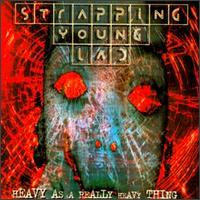 Self-confessed “musical whore” Devin Townsend's
first outing under the Strapping Young Lad moniker is pretty much the
definition of a slow burn. Despite largely favourable critical review
upon its release in 1995, it sold only 143 copies in its first six
months on sale and it's creator has largely dismissed it as a
collection of remixed demos with two great songs on it. Which is
unfair. Sure the production is lacking, but 'Heavy As A Really Heavy
Thing' is a genuinely great album. It's blending of thrash, death and
industrial metal, along with the emphasis of intensity over song
structure and a heaped dose of black humour makes for an absolute
mind fuck of a roller-coaster ride. It hasn't aged particularly well,
and it may be a sore point for it's creator who has gone on to do
much bigger an better things with Strapping Young Lad, as well as
under his own name, but there is something about 'Heavy As A Really
Heavy Thing' that makes it a valuable listening experience.
Self-confessed “musical whore” Devin Townsend's
first outing under the Strapping Young Lad moniker is pretty much the
definition of a slow burn. Despite largely favourable critical review
upon its release in 1995, it sold only 143 copies in its first six
months on sale and it's creator has largely dismissed it as a
collection of remixed demos with two great songs on it. Which is
unfair. Sure the production is lacking, but 'Heavy As A Really Heavy
Thing' is a genuinely great album. It's blending of thrash, death and
industrial metal, along with the emphasis of intensity over song
structure and a heaped dose of black humour makes for an absolute
mind fuck of a roller-coaster ride. It hasn't aged particularly well,
and it may be a sore point for it's creator who has gone on to do
much bigger an better things with Strapping Young Lad, as well as
under his own name, but there is something about 'Heavy As A Really
Heavy Thing' that makes it a valuable listening experience. White Zombie – 'Astro Creep: 2000'
 With the surprising breakout
success of White Zombie's previous album 'La Sexorcisto: Devil Music
Volume One' all eyes were on the New York alternative metal outfit.
The album they produced, 'Astro Creep: 2000', would go on to not only
be their most successful album... but it would prove to be their
last. Favouring a more industrial metal sound over their previous
psychedelic-tinged groove metal it produced monster hits such as
'More Human Than Human', 'Electric Head', and 'Super Charger Heaven'.
It is a thematic blur of horror, sci-fi and Americana set to
down-tuned guitars and addictive keyboards that is both heavy and
dance-friendly. It is the formula that would go on to inform vocalist
Rob Zombies most successful solo albums. The album would go double
platinum and see the band receive a Grammy for their performance of
'More Human Than Human'. It is a classic example of a band dissolving
at the peak of their success. But what a way to go out.
With the surprising breakout
success of White Zombie's previous album 'La Sexorcisto: Devil Music
Volume One' all eyes were on the New York alternative metal outfit.
The album they produced, 'Astro Creep: 2000', would go on to not only
be their most successful album... but it would prove to be their
last. Favouring a more industrial metal sound over their previous
psychedelic-tinged groove metal it produced monster hits such as
'More Human Than Human', 'Electric Head', and 'Super Charger Heaven'.
It is a thematic blur of horror, sci-fi and Americana set to
down-tuned guitars and addictive keyboards that is both heavy and
dance-friendly. It is the formula that would go on to inform vocalist
Rob Zombies most successful solo albums. The album would go double
platinum and see the band receive a Grammy for their performance of
'More Human Than Human'. It is a classic example of a band dissolving
at the peak of their success. But what a way to go out. Moonspell – 'Wolfheart'
 Portugal's Moonspell made their début in
1995 with the dark 'Wolfheart'. Mixing gothic metal and black metal
with elements of doom, the band thematically walked a similar path to
England's Cradle Of Filth, though opted for a far more romanticised
execution. Their first offering 'Wolfheart' is one of those
wonderfully naïve recordings that take on and increasing charm as
the band's evolve and grow over time. With songs such as 'Wolf
Shade', 'Vampira', 'An Erotic Alchemy', and 'Alma Mater' the band
blend morbid lyrics, death grunt and baritone vocals, sexy keyboards
and addictive riffs to create a strong musical foundation from which
to move forward. There are a few points where the formula slips into
self-parody, but they are as previously stated mainly out of
nativity. And to judge the whole album at their expense is an
injustice. 'Wolfheart' along with Tiamat's 'Wildhoney', Type O
Negative's 'Bloody Kisses' and My Dying Bride's 'The Angel And Dark
River' provide the foundations for the gothic metal genre.
Portugal's Moonspell made their début in
1995 with the dark 'Wolfheart'. Mixing gothic metal and black metal
with elements of doom, the band thematically walked a similar path to
England's Cradle Of Filth, though opted for a far more romanticised
execution. Their first offering 'Wolfheart' is one of those
wonderfully naïve recordings that take on and increasing charm as
the band's evolve and grow over time. With songs such as 'Wolf
Shade', 'Vampira', 'An Erotic Alchemy', and 'Alma Mater' the band
blend morbid lyrics, death grunt and baritone vocals, sexy keyboards
and addictive riffs to create a strong musical foundation from which
to move forward. There are a few points where the formula slips into
self-parody, but they are as previously stated mainly out of
nativity. And to judge the whole album at their expense is an
injustice. 'Wolfheart' along with Tiamat's 'Wildhoney', Type O
Negative's 'Bloody Kisses' and My Dying Bride's 'The Angel And Dark
River' provide the foundations for the gothic metal genre.
Babes In Toyland –
'Nemesisters'
 'Nemesisters' is
another one of those great albums by a great band that unfortunately
dissolved soon after release. American punk rockers Babes In Toyland
achieved mainstream success on the back of the grunge and alt rock
movements of the early 90s with their second album 'Fontanelle'
showcasing a refreshingly raw and primal sound 'Their follow-up
'Nemesisters' walked a much more experimental path that blended their
previous formula with heavy metal and power pop to create a
deceptively slick but punishing album. Songs such as 'Hello', 'Sweet
69', '22' and 'Killer On The Road' are great and show a band having a
bit more fun with their sound. While the de-constructed cover
versions of 'All By Myself', 'Deep Song' and 'We Are Family are worth
the price of admission alone. The anger of their first two albums
that endeared them to so many at the time is largely missing in
favour of more humour, which led to mixed reviews on its release. But
it is long overdue a re-evaluation.
'Nemesisters' is
another one of those great albums by a great band that unfortunately
dissolved soon after release. American punk rockers Babes In Toyland
achieved mainstream success on the back of the grunge and alt rock
movements of the early 90s with their second album 'Fontanelle'
showcasing a refreshingly raw and primal sound 'Their follow-up
'Nemesisters' walked a much more experimental path that blended their
previous formula with heavy metal and power pop to create a
deceptively slick but punishing album. Songs such as 'Hello', 'Sweet
69', '22' and 'Killer On The Road' are great and show a band having a
bit more fun with their sound. While the de-constructed cover
versions of 'All By Myself', 'Deep Song' and 'We Are Family are worth
the price of admission alone. The anger of their first two albums
that endeared them to so many at the time is largely missing in
favour of more humour, which led to mixed reviews on its release. But
it is long overdue a re-evaluation.
Opeth – 'Orchid'
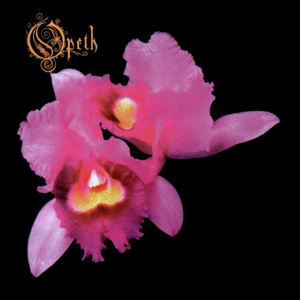 Since their début album 'Orchid' in 1995, Sweden's
Opeth have gone on to be one of the cornerstones of modern heavy
metal. Progressive, cerebral and always interesting, their path
started with the seminal 'Orchid'. Progressive rock, folk
rock/acoustic, black metal, and death metal elements came together in
a perfect storm that kicked both genres up the arse and made a lot of
people take notice. Most of the songs exceed nine minutes in length
and showcased a hungry young band with grand ambitions, but most
importantly the talent to live up to them. Songs like 'In Mist She
Was Standing', 'Forest Of October', 'Requiem', and 'The Apostle In
Triumph' are grand evocations that foreshadow a long and eclectic
career as they blend extreme metal with prog, jazz, folk and simply
wonderful instrument ion. It is deeply introspective to the point of
being awkwardly pretentious in places, however so strong is the
band's conviction, you can't help but fall in love with it.
Since their début album 'Orchid' in 1995, Sweden's
Opeth have gone on to be one of the cornerstones of modern heavy
metal. Progressive, cerebral and always interesting, their path
started with the seminal 'Orchid'. Progressive rock, folk
rock/acoustic, black metal, and death metal elements came together in
a perfect storm that kicked both genres up the arse and made a lot of
people take notice. Most of the songs exceed nine minutes in length
and showcased a hungry young band with grand ambitions, but most
importantly the talent to live up to them. Songs like 'In Mist She
Was Standing', 'Forest Of October', 'Requiem', and 'The Apostle In
Triumph' are grand evocations that foreshadow a long and eclectic
career as they blend extreme metal with prog, jazz, folk and simply
wonderful instrument ion. It is deeply introspective to the point of
being awkwardly pretentious in places, however so strong is the
band's conviction, you can't help but fall in love with it. My Dying Bride – 'The Angel And The Dark River'
 Yorkshire's
masters of the morbid and morose, My Dying Bride, hit their stride
with 1995's 'The Angel And the Dark River'. The third studio outing
from the band created their most sumptuously melancholic expression
up to that point. Moving away from their death-doom origins, they
drenched themselves in gothic misery as though it was rain on the
moors outside Whitby. Aaron Stainthorpe dropped the death grunts in
favour of his anguished baritone, while the songs took their cues
from the intricate violin and keyboard work of Martin Powell. The end
result is seven tracks of epic proportion that ooze gothic melodrama
in it's purest sonic form. It can be argued that this is the point
where the gothic-doom genre solidified into a definitive formula, but
it goes without question that this is one of the band's strongest and
most strikingly original albums in their expansive canon. Quite
simply put, if misery loves company, let this album be your companion
is despair.
Yorkshire's
masters of the morbid and morose, My Dying Bride, hit their stride
with 1995's 'The Angel And the Dark River'. The third studio outing
from the band created their most sumptuously melancholic expression
up to that point. Moving away from their death-doom origins, they
drenched themselves in gothic misery as though it was rain on the
moors outside Whitby. Aaron Stainthorpe dropped the death grunts in
favour of his anguished baritone, while the songs took their cues
from the intricate violin and keyboard work of Martin Powell. The end
result is seven tracks of epic proportion that ooze gothic melodrama
in it's purest sonic form. It can be argued that this is the point
where the gothic-doom genre solidified into a definitive formula, but
it goes without question that this is one of the band's strongest and
most strikingly original albums in their expansive canon. Quite
simply put, if misery loves company, let this album be your companion
is despair. Nine Inch Nails – 'Further Down The Spiral'
 “A remix album!” I hear you cry? Well yes, and
with good reason. 1994's 'The Downward Spiral' by Trent Reznor and
his Nine Inch Nails is undoubtedly one of the most important
industrial rock albums of all time. But it is a testament to the
original album and Reznor as a writer that the collaborative
deconstructions and regurgitations on it's remix companion are so
strong. What we have here is the experimentalism of the original
pushed to the fore by a cohort of legendary names such as Rick Rubin,
J.G. Thirlwell, Jhonn Balance, Peter Christopherson, Aphex Twin, Dave
Navarro, Sean Beavan, Dave Ogilvie and the Nine Inch Nails crew
themselves. The name of the game isn't the standard dance-friendly
mixes that come to inhabit remix albums these days, but a purely
industrial kind of anarchy that builds on the work seen on 'Fixed'
and 'The Downward Spiral' to become its own monster. It's remixing
done right.
“A remix album!” I hear you cry? Well yes, and
with good reason. 1994's 'The Downward Spiral' by Trent Reznor and
his Nine Inch Nails is undoubtedly one of the most important
industrial rock albums of all time. But it is a testament to the
original album and Reznor as a writer that the collaborative
deconstructions and regurgitations on it's remix companion are so
strong. What we have here is the experimentalism of the original
pushed to the fore by a cohort of legendary names such as Rick Rubin,
J.G. Thirlwell, Jhonn Balance, Peter Christopherson, Aphex Twin, Dave
Navarro, Sean Beavan, Dave Ogilvie and the Nine Inch Nails crew
themselves. The name of the game isn't the standard dance-friendly
mixes that come to inhabit remix albums these days, but a purely
industrial kind of anarchy that builds on the work seen on 'Fixed'
and 'The Downward Spiral' to become its own monster. It's remixing
done right. Paradise Lost – 'Draconian Times'
 They may have christened a new genre with there album
'Gothic' but it wasn't until 1995's 'Draconian Times' that
Yorkshire's Paradise Lost began to reach their potential. The band
referred to it as the missing link between Metallica and The Sisters
Of Mercy, and that description holds up throughout. Spacious epic
guitars, thunderous drums, brilliant riffs, sensual keyboards and
anguished vocals make this an essential release in the
gothic-doom/gothic metal genres. The arrangements are more rock
orientated, and the performances more contemplative than previous
albums. The album charted well across Europe and the subsequent
touring sealed the band's status as a headline act to take note of.
After this album the songwriting would veer more towards dark rock
and electronic orientated sounds that would alienate some of their
early audience, but in recent years the influence of this album has
been felt increasingly amongst new Paradise Lost releases which have
drawn those fans back.
They may have christened a new genre with there album
'Gothic' but it wasn't until 1995's 'Draconian Times' that
Yorkshire's Paradise Lost began to reach their potential. The band
referred to it as the missing link between Metallica and The Sisters
Of Mercy, and that description holds up throughout. Spacious epic
guitars, thunderous drums, brilliant riffs, sensual keyboards and
anguished vocals make this an essential release in the
gothic-doom/gothic metal genres. The arrangements are more rock
orientated, and the performances more contemplative than previous
albums. The album charted well across Europe and the subsequent
touring sealed the band's status as a headline act to take note of.
After this album the songwriting would veer more towards dark rock
and electronic orientated sounds that would alienate some of their
early audience, but in recent years the influence of this album has
been felt increasingly amongst new Paradise Lost releases which have
drawn those fans back. Garbage – 'Garbage'
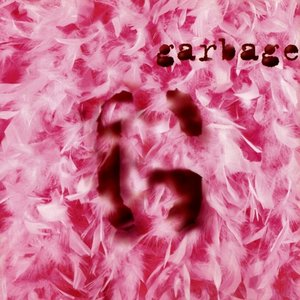 Out
of an anarchic sea of band break-ups, suicide, and heavy
experimentation, the eponymous début album by rock super-group (of
sorts) Garbage in 1995 and the band members never looked back.
Spear-headed by ex-Spooner hand and producer Butch Vig and fronted by
the indomitable Shirley Manson the band produced a richly layered,
grungy and dark album that innovated on every single track. The album
with songs such as 'Vow', 'Only Happy When It Rains', 'Queer',
'Milk', and 'Stupid Girl' tearing up radio stations worldwide was an
instant hit and made Garbage a household name over night. It charted
high and achieved gold and platinum status in numerous countries
around the world, and is still considered one of the most innovative
and strong débuts of the 1990s by many critics. Even after 20 years,
it is an album that still holds up.
Out
of an anarchic sea of band break-ups, suicide, and heavy
experimentation, the eponymous début album by rock super-group (of
sorts) Garbage in 1995 and the band members never looked back.
Spear-headed by ex-Spooner hand and producer Butch Vig and fronted by
the indomitable Shirley Manson the band produced a richly layered,
grungy and dark album that innovated on every single track. The album
with songs such as 'Vow', 'Only Happy When It Rains', 'Queer',
'Milk', and 'Stupid Girl' tearing up radio stations worldwide was an
instant hit and made Garbage a household name over night. It charted
high and achieved gold and platinum status in numerous countries
around the world, and is still considered one of the most innovative
and strong débuts of the 1990s by many critics. Even after 20 years,
it is an album that still holds up. My Life With The Thrill Kill Kult – 'Hit & Run Holiday'
 Most often
associated with the early years of Chicago's Wax Trax! Records, My
Life With The Thrill Kill Kult had since made the move to Interscope
by they time they dropped 'Hit & Run Holiday'. Already infamous
for psychedelic industrial hits such as 'Kooler Than Jesus', 'A Daisy
Chain 4 Satan', and 'Sex On Wheelz', the band threw in generous
helpings of surf rock, motown and good ol' fashioned American fun for
their answer to a concept album. The album is far sunnier than its
predecessors with a kitsch b-movie party atmosphere that frames the
band's usual themes of camp excess. It may be somewhat over shadowed
by classic albums such as 'Confessions Of A Knife...', but this is a
damn fun album that has aged really well. It was critically well
received at the time of its release and is easily the most accessible
of the band's discography for newcomers to get in to. It is
definitely one to explore if you haven't done so already.
Most often
associated with the early years of Chicago's Wax Trax! Records, My
Life With The Thrill Kill Kult had since made the move to Interscope
by they time they dropped 'Hit & Run Holiday'. Already infamous
for psychedelic industrial hits such as 'Kooler Than Jesus', 'A Daisy
Chain 4 Satan', and 'Sex On Wheelz', the band threw in generous
helpings of surf rock, motown and good ol' fashioned American fun for
their answer to a concept album. The album is far sunnier than its
predecessors with a kitsch b-movie party atmosphere that frames the
band's usual themes of camp excess. It may be somewhat over shadowed
by classic albums such as 'Confessions Of A Knife...', but this is a
damn fun album that has aged really well. It was critically well
received at the time of its release and is easily the most accessible
of the band's discography for newcomers to get in to. It is
definitely one to explore if you haven't done so already.
Rammstein – 'Herzeleid'
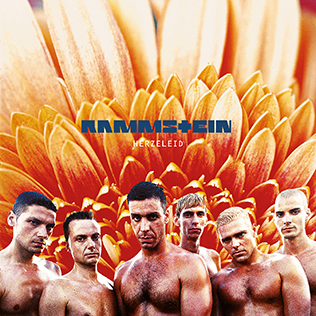 Ah Rammstein, where
would modern metal be with out those industrial Teutonic pyromaniacs?
I dread to think. The band are international arena headliners,
selling out venues all over the world and have become one of the most
successful heavy bands on the planet. But it comes from such an
unlikely source. Born from the German Neue Deutsche Härte scene, the
band's first album 'Herzeleid' is a fairly standard mix of industrial metal,
European techno and dark, sexual German humour. The album is very
easy to get into with singles such as 'Du Riechst So Gut',
'Seemann', 'Asche Zu Asche', and the disturbing 'Rammstein', which
featured on the soundtrack to David Lynch's 'Lost Highway'. It's
frenetic, heavy, and easy to dance too. But once again it is a very
naïve début album that shows the seeds of the later genius. The
band definitely had some growing to do between this and their
breakthrough 'Mutter', but Herzeleid is a charming and catchy first
outing from these future powerhouses.
Ah Rammstein, where
would modern metal be with out those industrial Teutonic pyromaniacs?
I dread to think. The band are international arena headliners,
selling out venues all over the world and have become one of the most
successful heavy bands on the planet. But it comes from such an
unlikely source. Born from the German Neue Deutsche Härte scene, the
band's first album 'Herzeleid' is a fairly standard mix of industrial metal,
European techno and dark, sexual German humour. The album is very
easy to get into with singles such as 'Du Riechst So Gut',
'Seemann', 'Asche Zu Asche', and the disturbing 'Rammstein', which
featured on the soundtrack to David Lynch's 'Lost Highway'. It's
frenetic, heavy, and easy to dance too. But once again it is a very
naïve début album that shows the seeds of the later genius. The
band definitely had some growing to do between this and their
breakthrough 'Mutter', but Herzeleid is a charming and catchy first
outing from these future powerhouses. Marilyn Manson – 'Smells Like Children'
 Another remix album?! Yes! 1995's
'Smells Like Children' is a real oddity in the Manson discography,
and one that was meant to be far darker and more conceptual than it
actually turned out (see Manson's autobiography 'The Long Hard Road
Out Of Hell'). It bridges the gap between the nightmarish psychedelic
rock of his début album with elements of a nastier,
thrash-industrial metal sound that would characterise his follow-up,
'Antichrist Svperstar'. Featuring remixes, crazy instrumentals and
warped samples, the album's biggest selling points are its brilliant
covers of 'Sweet Dreams (Are Made Of This)' – which gave the band
their first heavy rotation on MTV – 'Rock 'n' Roll Nigger', and 'I
Put A Spell On You'. It is a confusing, and odd collection that
received mixed to negative reviews upon release. But it has a genuine
character to it that is hard to find on remix albums these days, and
for that it is a must listen.
Another remix album?! Yes! 1995's
'Smells Like Children' is a real oddity in the Manson discography,
and one that was meant to be far darker and more conceptual than it
actually turned out (see Manson's autobiography 'The Long Hard Road
Out Of Hell'). It bridges the gap between the nightmarish psychedelic
rock of his début album with elements of a nastier,
thrash-industrial metal sound that would characterise his follow-up,
'Antichrist Svperstar'. Featuring remixes, crazy instrumentals and
warped samples, the album's biggest selling points are its brilliant
covers of 'Sweet Dreams (Are Made Of This)' – which gave the band
their first heavy rotation on MTV – 'Rock 'n' Roll Nigger', and 'I
Put A Spell On You'. It is a confusing, and odd collection that
received mixed to negative reviews upon release. But it has a genuine
character to it that is hard to find on remix albums these days, and
for that it is a must listen. Fear Factory – 'Demanufacture'
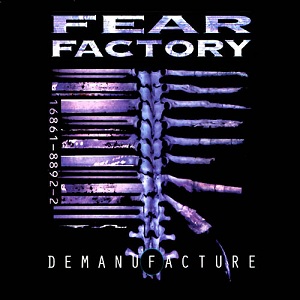 Cyber metal outfit Fear Factory unleashed
their sophomore album 'Demanufacture' in 1995 and with it etched
their place in metal history. The conceptual storyline is pure
Terminator as man goes head to head with the machines set to a
blistering display of heavy riffs, pounding rhythms and scathing
synthesizers as thrash, industrial and groove metal elements are
churned up within. It is a landmark industrial metal album that was
years ahead of its time, spawning a host of imitators over the years
while tracks such as 'Demanufacture', 'Zero Signal', 'Replica', 'Piss
christ' and their cover of 'Dog Day Sunrise' have gone on to become
genre standards. Fear Factory's career may have been subject to its
ups and downs in the years since, but this album is the linchpin (no
pun intended) of their discography that captures the band at their
best in terms of songwriting quality and level of performance.
Cyber metal outfit Fear Factory unleashed
their sophomore album 'Demanufacture' in 1995 and with it etched
their place in metal history. The conceptual storyline is pure
Terminator as man goes head to head with the machines set to a
blistering display of heavy riffs, pounding rhythms and scathing
synthesizers as thrash, industrial and groove metal elements are
churned up within. It is a landmark industrial metal album that was
years ahead of its time, spawning a host of imitators over the years
while tracks such as 'Demanufacture', 'Zero Signal', 'Replica', 'Piss
christ' and their cover of 'Dog Day Sunrise' have gone on to become
genre standards. Fear Factory's career may have been subject to its
ups and downs in the years since, but this album is the linchpin (no
pun intended) of their discography that captures the band at their
best in terms of songwriting quality and level of performance.
Right, that's our countdown of 1995 in 20 albums. We hope you enjoyed it and we're sure you have your own picks to add to the list. If you want to make your voice heard leave a comment on this post on our Facebook page. We'll be back with another countdown next year when we look back at 1986 and 1996.





:format(jpeg):mode_rgb()/discogs-images/R-381419-1296652376.jpeg.jpg)




![[Valid Atom 1.0]](https://blogger.googleusercontent.com/img/b/R29vZ2xl/AVvXsEj3a03SrXevQiOgsvMmzyymlNVwDpIOVsYGNLbQjPPLefU_8lqiMxQyGp655KB1l7Uaz4oXl-xY-JwWvyDzcA_7V0NHcSqEIe50Bpv2PzSN-hp9iV2qgCsbvdRwD5XCbh0wQw0GYZMqLRRU/s1600/valid-atom.png "Validate my Atom 1.0 feed")


